1. What Haaretz Found
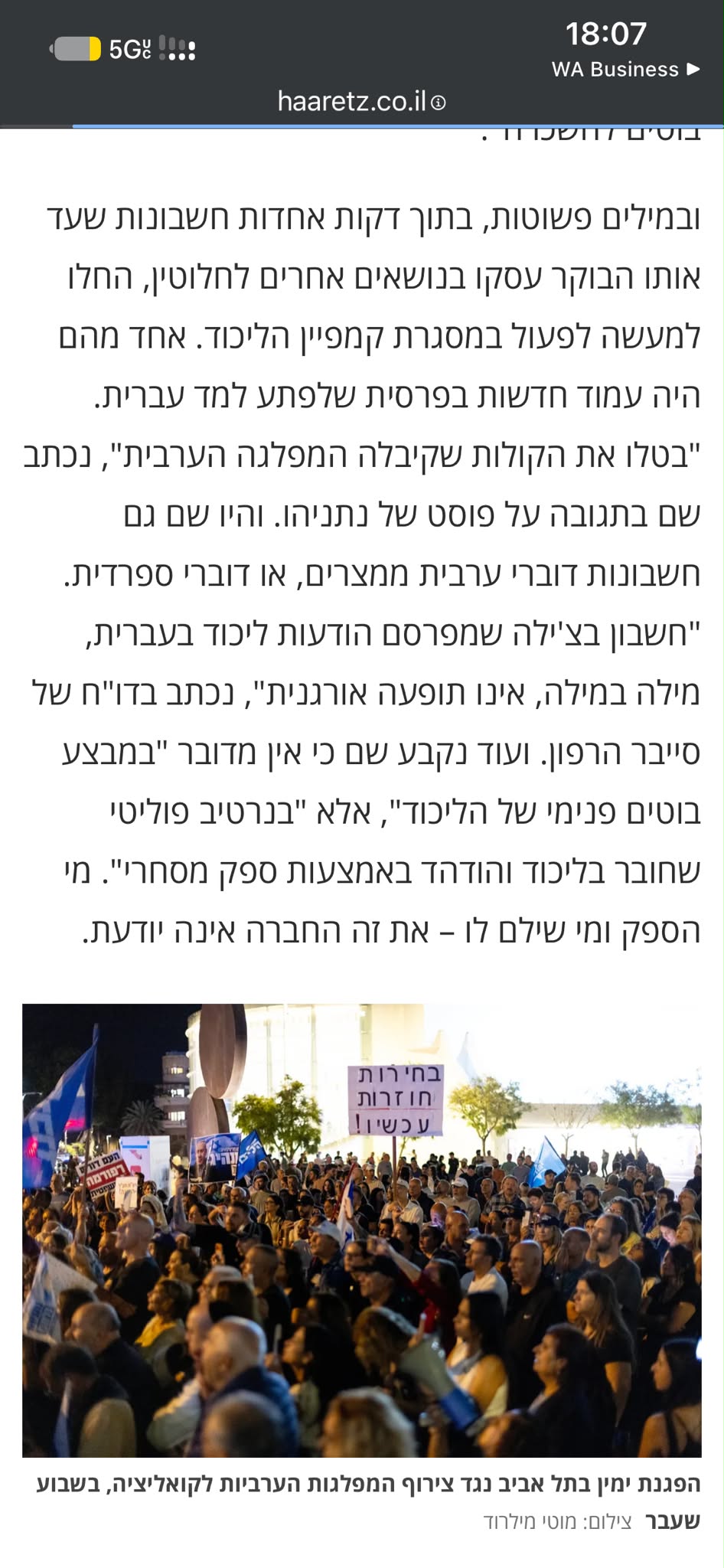
Haaretz's investigation traces the roots of a "stolen election" narrative in Israel back roughly six months before election day — well before a vote was even scheduled. According to the reporting, claims that polling stations in Arab-society precincts were marred by fraud and forgery were first raised in political messaging and television studio appearances, then re-emerged and intensified once the governing party's election-night results came in below expectations.
Two posts examined in the investigation illustrate the scale the narrative reached on X. One statement — alleging the election had been "stolen by Arab parties that support terror" — circulated across 17 groups and channels, was read aloud on broadcast television, and drew approximately 9.8 million views on X alone. A follow-up statement published the next day reached 1.3 million views and roughly 3,500 shares.
Where our research fits in
Haaretz's reporters worked with network researchers to establish how much of that amplification was organic public reaction — and how much was engineered. Cyber Harpoon's bot-network analysis is cited directly in the piece as part of that answer.
2. What We Found: A Commercial Bot Network, Not Grassroots Reach
Our analysts mapped the account activity behind the amplification and identified a coordinated network exhibiting the behavioral signatures of commercial bot infrastructure — not independent, organic engagement. One of the clearest signals: an account based in Chile posting Hebrew-language political statements that matched the governing party's official messaging word-for-word, in real time. Independent commentary does not look like this. Identical, simultaneous, cross-border repetition of a domestic political statement is a network signature.
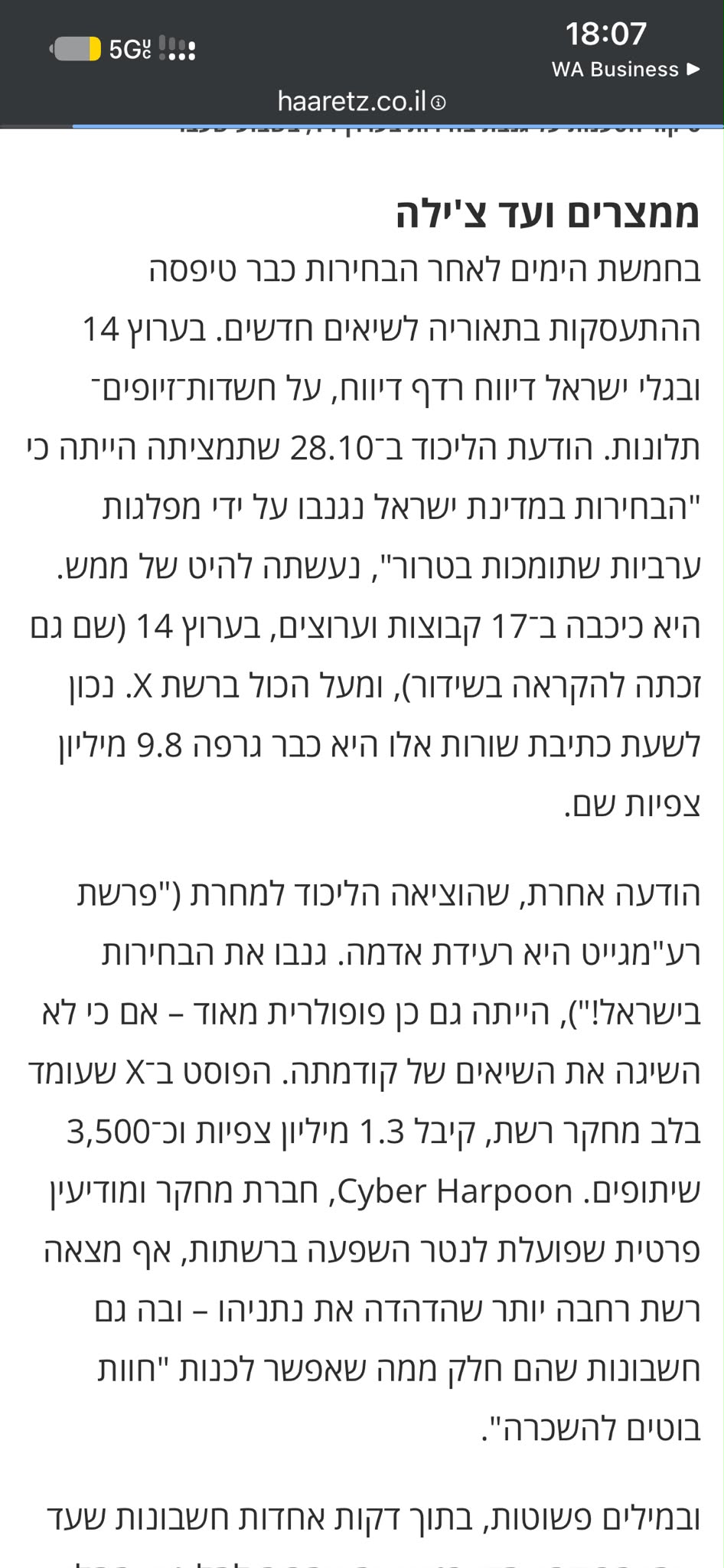
Our assessment, quoted directly in the article: the underlying narrative was not run as an internal bot operation by the party whose messaging it amplified. It was crafted, then echoed through commercial, third-party bot infrastructure — rented network capacity designed to manufacture the appearance of organic, grassroots momentum. Who operated or paid for that infrastructure is not something we could determine; that opacity is itself a defining, and deliberate, feature of the commercial bot-for-hire market we track globally.
We also mapped a broader network of accounts amplifying the same political figure, including accounts consistent with rented "bot farms for hire" — commercially operated account clusters that can be activated on demand to boost any message, in any language, on any platform, for whoever is paying.
Why the Chile node matters
A single out-of-country account posting domestic political content isn't newsworthy on its own — people everywhere comment on elections that aren't theirs. What made this account diagnostic was the combination: content matched official messaging character-for-character, posted in the same language as the target audience despite no apparent connection to it, timed to coincide with the messaging's initial release. That combination is consistent with a managed account operating from a shared content feed — one node in a larger, coordinated infrastructure rather than an isolated, independent voice.
3. The Timeline
4. Why This Matters Beyond One Election
This case is a clean, publicly documented example of a pattern Cyber Harpoon encounters repeatedly across markets, languages, and political contexts: a message is crafted by a motivated party, then handed off to commercial infrastructure that manufactures the appearance of broad, organic support. The network doing the amplifying rarely has any real connection to the cause it's amplifying — it's rented capacity, available to whoever can pay for it, in whatever language and on whatever platform the client needs.
That has consequences well beyond elections. The same bot-for-hire infrastructure we identified here is structurally identical to what we find behind manufactured brand backlash, fabricated consumer sentiment, coordinated harassment campaigns against public figures, and manipulated engagement in financial markets. Detecting it requires the same forensic approach regardless of the target: cross-platform account correlation, content-matching analysis, and behavioral-pattern detection that separates genuine public reaction from infrastructure built to simulate it.
What we are, and aren't, claiming
Cyber Harpoon's research establishes that a significant share of the amplification behind this narrative bore the signatures of coordinated, commercially operated bot activity — not that every account discussing the election was inauthentic, and not a judgment on the underlying political dispute itself. Attribution of who commissioned and paid for the network remains unresolved; that is consistent with how this market is designed to operate.
Sources
Primary Reporting
- Haaretz — Bar Peleg & Omer Ben Yaacov, “Seeds of the 'Stolen Election' Campaign Were Planted Half a Year Ago. Now Likud Is Reaping the Harvest,” November 6, 2026. haaretz.co.il/news/magazine/2026-11-06/ty-article-magazine/.premium/000001a1-a7a4-d2e9-a5ad-bffebcc80000